
The most popular advice says to paper trade until the virtual account is green, then fund a live one. That sequence builds overconfidence, not skill. The public trades on news. Insiders trade on information, and the public copy of that information shows up late.
A paper trading simulator lets you test how you read a congressional disclosure, an insider filing, or a whale print before cash is involved. You are grading the decision, not racing the headline. I rank the best paper trading platform for beginners on simulated balance, order journaling, educational tools, ease of use, device sync, and pricing. Leaderboard rank is not on that list.
Treat a green virtual balance as a lab note, not a green light.
A 2024 study found a cautionary pattern. Participants who used a stock-market simulator more actively, accepted greater risk, or posted stronger stock-level results were more likely to open real-money accounts. Those same groups then traded more actively and significantly underperformed, according to a Journal of Behavioral Finance study. Users can misread skill when they ignore risk, diversification, holding periods, and trading costs.
Disclosures arrive late, and congressional amounts come in ranges. A simulator measures decision-making. It does not promise a result. Seven picks follow, judged by whether they make you write down the reason, not just watch the chart.
Table of Contents
- 1. Congress, Insider & Whale Trading Signals
- 2. TradingView Paper Trading
- 3. Webull paperTrade
- 4. thinkorswim paperMoney by Charles Schwab
- 5. moomoo Paper Trading
- 6. Interactive Brokers (IBKR) Paper Trading
- 7. NinjaTrader Trading Simulator
- Beginner Paper Trading Platforms at a Glance
- Practice Like a Researcher, Not a Gambler
1. Congress, Insider & Whale Trading Signals
If you want to follow politicians, corporate insiders, and large holders, start with the filing calendar. A chart will not tell you whether a buy was an open-market purchase or a mechanical sale. We put those public signals next to a paper account at TradeLikeInsiders so you can read the filing, place a simulated order, and keep the reason in a journal.
Covered officials must disclose qualifying purchases, sales, or exchanges above $1,000 on a Periodic Transaction Report. The deadline is the earlier of 30 days after notice or 45 days after the transaction, so the public alert can be weeks old, as the House Ethics financial disclosure guide explains. Amounts are ranges. Our copies of those congressional and insider disclosures are delayed. They are not real-time trades.
Corporate insiders are on a shorter clock. An insider generally files SEC Form 4 within two business days. The form names the insider, the issuer, the date, the code, the share count, and the holdings afterward, per the SEC insider reporting forms. Read the code. A tax-withholding sale is not a bearish open-market sale.
What you actually practice
Large managers are slower and incomplete. Under Rule 13f-1, a manager with discretion over at least $100 million in Section 13(f) securities files Form 13F within 45 days after quarter-end. The Form 13F instructions do not make that snapshot a full book. Hedges, shorts, and cash can sit outside it.
The view of congressional, insider, and whale signals gathers STOCK Act disclosures, Form 4 filings, and on-chain whale flow, then adds educational AI summaries. You practice with simulated money. No live funds are required. You log the order and later compare the result with the filing date and your written thesis.
Practical rule: Log the transaction date, the filing date, and the reason before you care about the simulated fill.
- Signals in one place: Official disclosures, insider filings, and large crypto transactions share a desk.
- Explanations, not orders: AI alerts can make a messy filing easier to review. They are not instructions.
- A journal you can replay: Performance history shows the decision, not a leaderboard badge.
Some market snapshots carry a publisher timestamp instead of a live tape. A good paper result is not a forecast and not advice. Monthly plans are listed as Pro at $9.99 and Elite at $19.99, with clear feature gates. You can follow congressional trades, insider activity, whale moves, and policy signals together on TradeLikeInsiders. A bill can change expected revenue or legal risk for a sector, and prices often move before the policy is final. One filing is still not proof the filer was right.
2. TradingView Paper Trading
TradingView is the chart-first simulator. The built-in paper account is free, needs no deposit, and is available globally. You can practice stocks, forex, crypto, and futures when the symbol and the data exist.
Most beginners meet a chart before they meet a journal field.
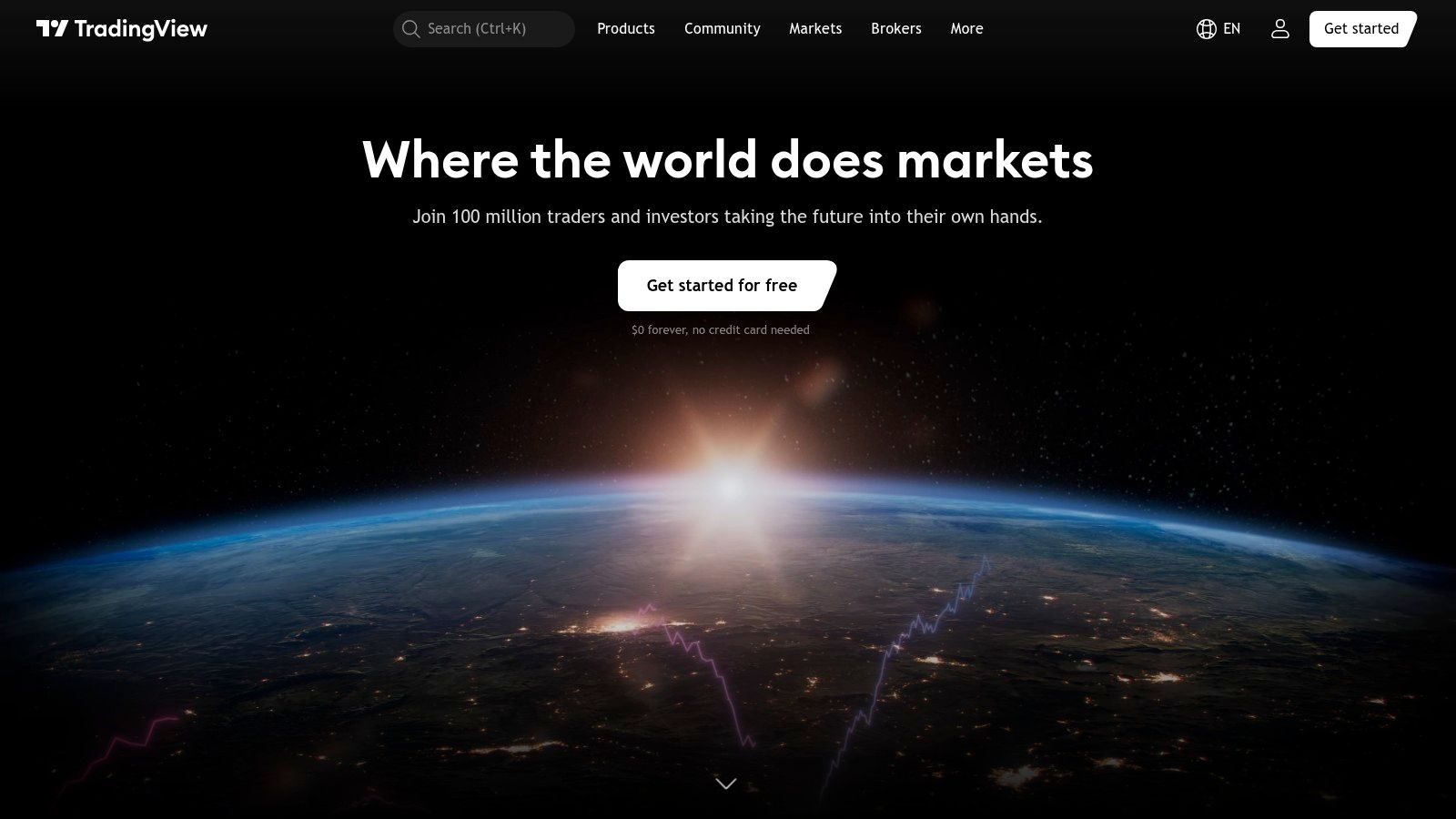
You place, edit, and close orders from the chart, an order ticket, or a depth view. Positions sit beside market activity, with indicators and drawing tools in the same window. That is excellent for reps. It is a weak teacher of research, because the default flow never asks why you clicked.
If the idea started with a disclosure, write the source and the timestamp first. Our notes on journaling a public signal are the habit I want beside this chart.
- Free to start: No deposit, and several markets share one workspace.
- Chart and ticket together: You rehearse the click where you saw the setup.
- Fills are kinder than live trading: Spread, partial fills, and pressure are easy to miss.
A market-simulation paper warns that treating price moves and order arrivals as independent can inflate results, while delayed quotes, instant fills, missing partials, and skipped slippage keep showing up as practical failures, in this market simulation study. Use TradingView paper trading for screen time. Treat virtual profit as proof you followed a process, not proof the trade was available.
3. Webull paperTrade
Open Webull on your phone and you can be in a paper trade in a minute. paperTrade is free on mobile, desktop, and web. Practice covers stocks, ETFs, options, crypto, futures, and event contracts.
The home screen is built for speed, which is useful only if your rules are already written.
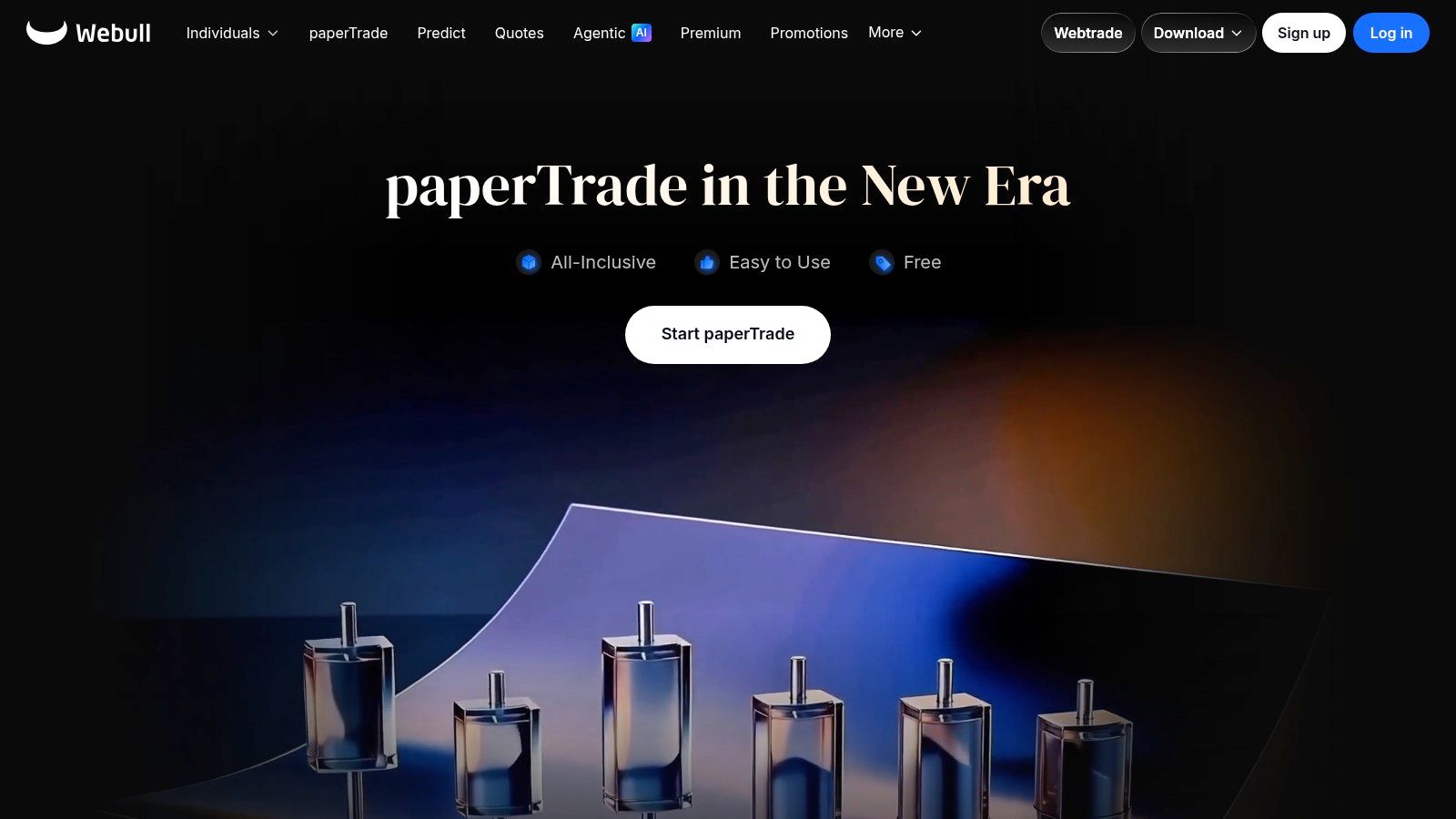
The newer simulator supports market, limit, stop, stop-limit, and trailing-stop orders, plus more options strategies than the legacy version. Confirm the mode. The two are not the same product.
On April 29, 2025, retail investors accounted for 36% of total order flow, an all-time high in J.P. Morgan figures reported by ARC Group. A lot of that flow is fast clicking. A simulator should slow you down with an order type you understand.
- Wide product list: One free simulator for several asset classes.
- Three devices: Daily reps are how a journal gets filled.
- Options practice: Use the newer mode if multi-leg orders are the lesson.
The screen can feel busy, and legacy versus new features confuse people. A smooth paper week does not establish future results. Set the virtual size near the account you would fund. Details are on Webull paper trading.
4. thinkorswim paperMoney by Charles Schwab
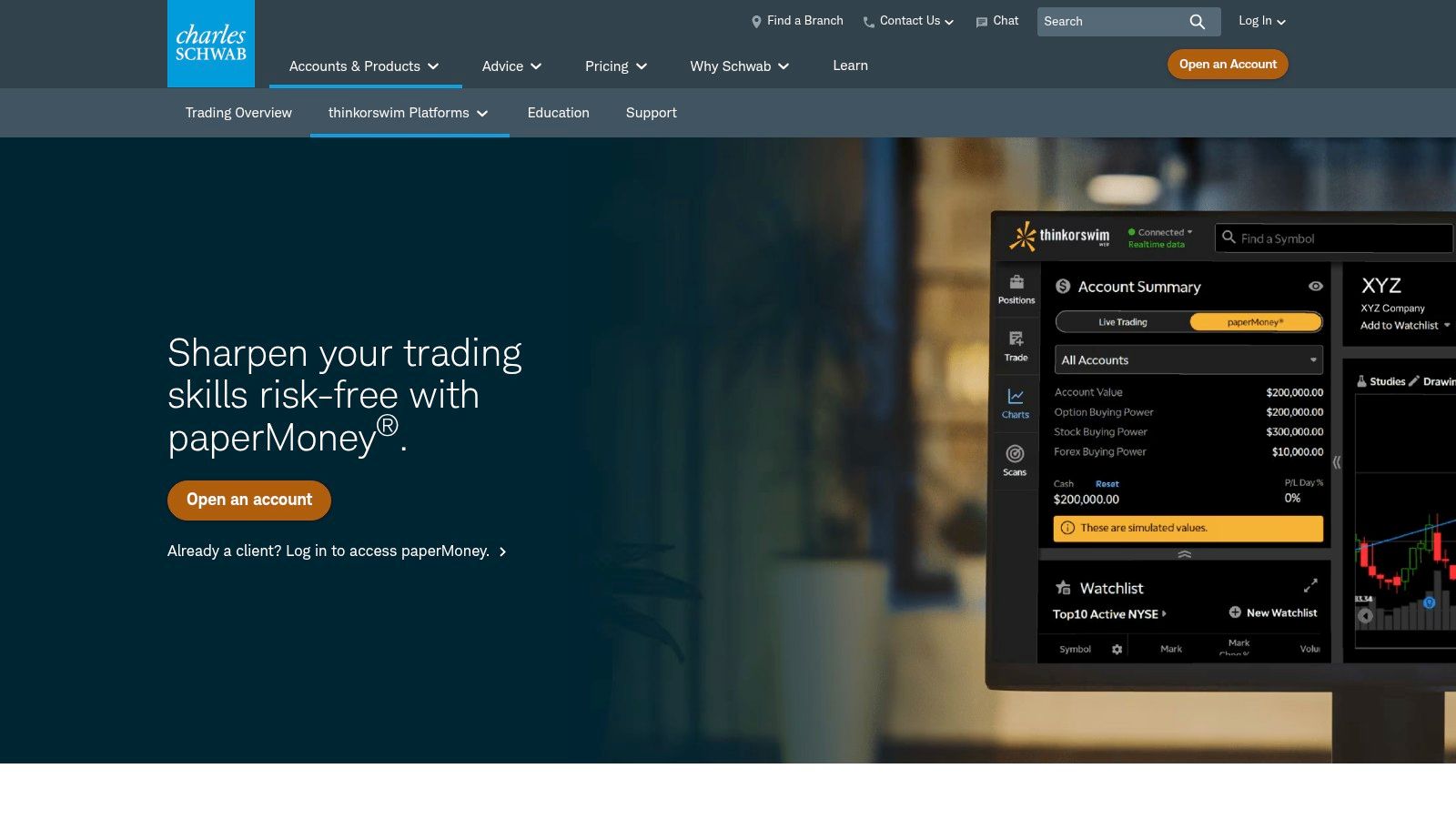
paperMoney lives inside thinkorswim. You practice stocks, options, futures, and forex on desktop, web, or mobile. Desktop is where thinkScript lives. Web and mobile do not include it. A Schwab account is required.
The layout is a workstation, not a game.
Students who completed stock-market simulation exercises posted a mean exam score of 84.10, versus 73.67 for a lecture-only group. The gap was significant, with a t-statistic of 3.23 and a p-value of 0.002, in this course study archived by ERIC. Participants generally had little real investing experience, and more than 70% would put less than 30% of savings into risky assets. That is the right use of a simulator. It is a class for decisions, not a trophy.
- Live-style menus: You learn the platform before you need it under pressure.
- Room to grow: Start with a basic ticket, then move into options analysis.
- Device choice: Desktop for study, phone for a quick review.
The desktop curve is steep, and the account gate stops a casual tryout. The menu is more than week one needs. I would open thinkorswim paperMoney after you can already explain a thesis in one sentence.
5. moomoo Paper Trading
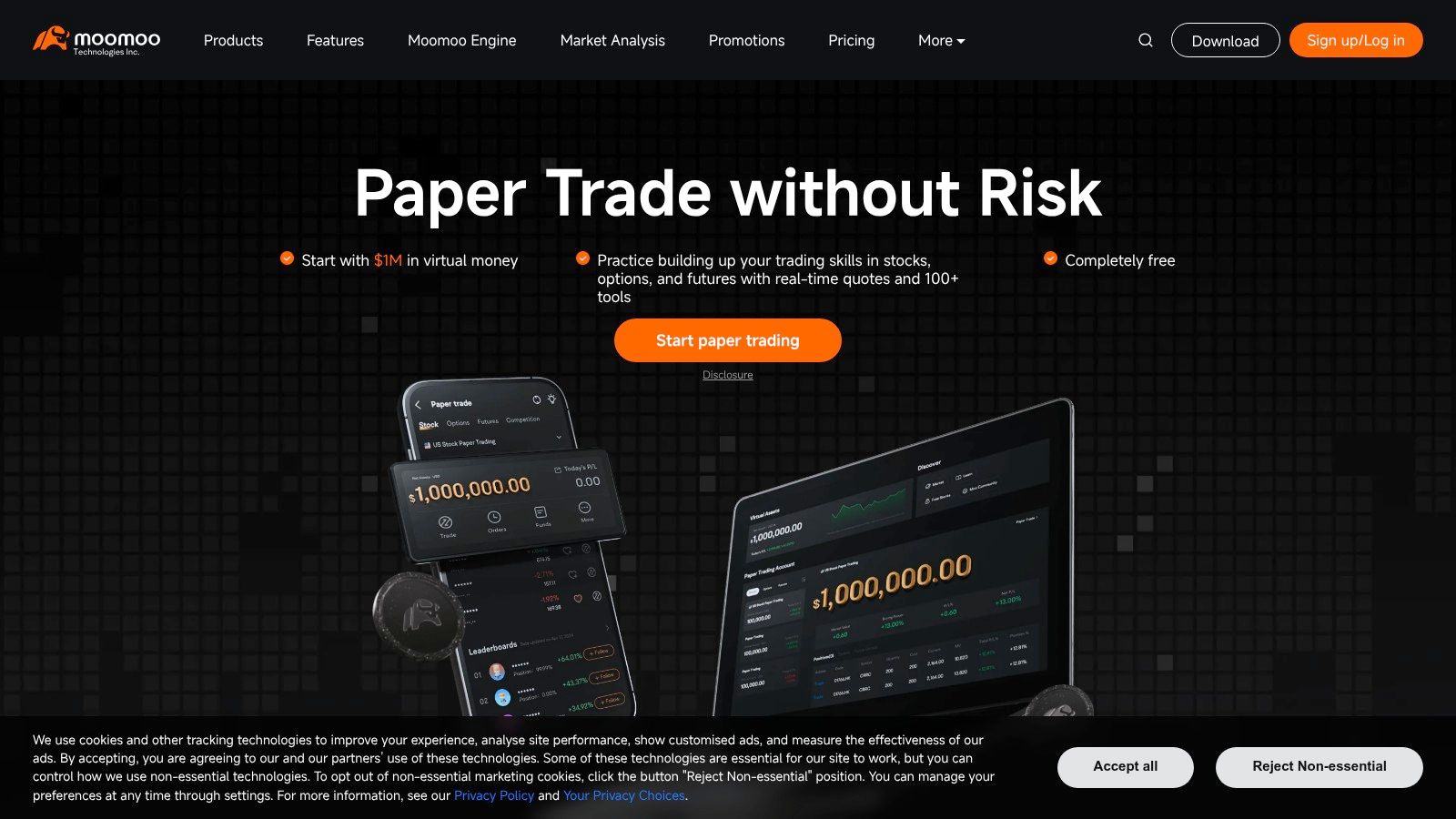
moomoo's weak spot is the number on the screen. You start with $1 million in virtual funds, with no brokerage account required, and you can practice stocks, options, and futures. The app also advertises real-time quotes, more than 100 tools, lessons, and a community.
A million-dollar book will not resemble a beginner's account.
In a nine-week equity simulation with 61 students, average test scores rose by 14 points out of 100, significant at better than the 99% level, and the strongest gains were among students who started weaker, according to this ERIC record of the simulation. In that group, 64% regularly used the online lessons, and 66% called the simulation effective or very effective for investment knowledge. Keep the lesson next to the order.
- No brokerage account is required to open the paper book.
- Lessons sit in the app, which is what lined up with the score gains.
- Size is your job. Cap each order as if the book were your real savings.
The interface takes time, and virtual performance does not ensure a live result. If you use moomoo paper trading, pretend the balance is the amount you would deposit.
6. Interactive Brokers (IBKR) Paper Trading
IBKR runs the paper account on the same platforms as live trading. That means Client Portal, Trader Workstation, and IBKR Mobile, across a wide set of markets, with API access if you want to test a workflow. New clients normally receive the paper account. What you can trade still follows your permissions and market-data setup, including margin and maintenance margin.
The ticket looks like the live product, which is the point and the hurdle.
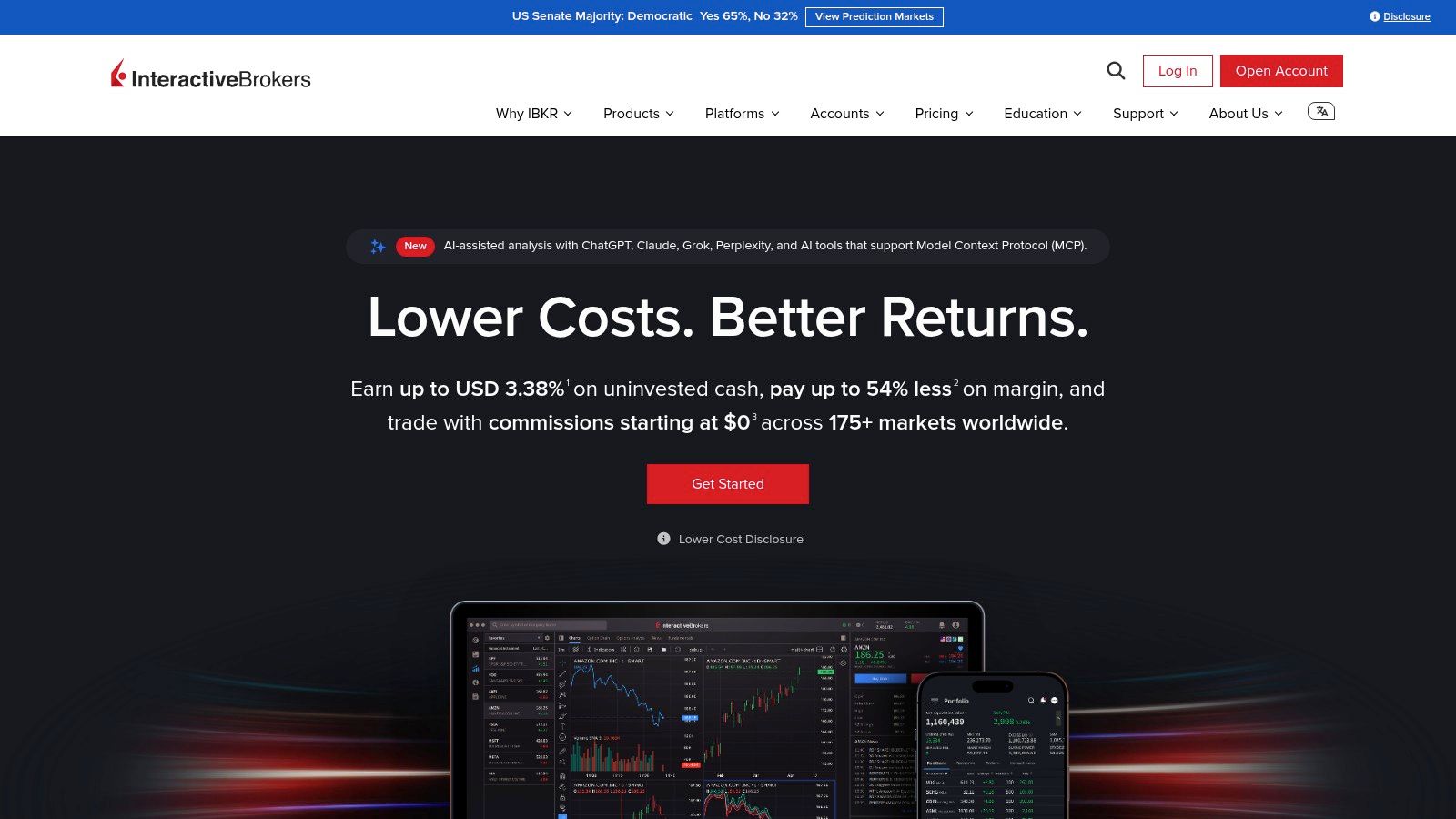
Fills use top-of-book data. Some order types and some products are unsupported or simulated differently. You are learning the brokerage, not receiving a perfect copy of a fast market.
If the ticket you practice is not the ticket you will use live, you are rehearsing the wrong clicks.
- Multi-market workflows: You see how a broad brokerage is organized.
- Technical practice: API testing matters when your rules are systematic.
- Permissions stay visible: The paper book follows the setup you configured.
Beginners trip on the terminology, and complex orders have limits. I would open Interactive Brokers paper trading only after a simpler journal habit exists. Otherwise the platform becomes the project.
7. NinjaTrader Trading Simulator
NinjaTrader is built for futures practice. You get the platform's charts, order entry, and a market-depth display. Simulator time is not capped. Live streaming data is a 14-day trial. After that you continue on delayed data, pay for a feed, or open an account for live data.
The depth ladder is the feature, and it is also the distraction.
This is the wrong first stop if you want long-term stocks, disclosures, or policy research. Depth will not explain a Form 4 code. It will teach you how a futures order meets the book, which is the right lesson only if futures are the market you mean to trade.
- Futures reps: Order entry and depth are the whole workout.
- No set end date on the simulator itself.
- Practice can continue after the live-data trial, on a slower tape.
Live data is not free forever, and futures concepts are heavy if a bid is still fuzzy. I would not call NinjaTrader the best paper trading platform for beginners who came to study filings. It fits a futures student who already journals. See the NinjaTrader trading simulator.
Beginner Paper Trading Platforms at a Glance
| Item | Account Needed | Asset Classes | Cost to Start | Best For |
|---|---|---|---|---|
| Congress, Insider & Whale Trading Signals | Paper-trading account; no live funds required | Stocks, crypto signals | Pro $9.99/month; Elite $19.99/month | Practicing with simulated money alongside public disclosures and market signals |
| TradingView Paper Trading | TradingView account | Stocks, forex, crypto, futures | Free | Practicing chart analysis across markets |
| Webull paperTrade | Webull account | Stocks, ETFs, options, crypto, futures, event contracts | Free | Practicing order entry and options strategies |
| thinkorswim paperMoney by Charles Schwab | Schwab account | Stocks, options, futures, forex | Free simulator | Learning within a feature-rich trading platform |
| moomoo Paper Trading | No brokerage account required | Stocks, options, futures | Free | Practicing with learning resources in an app |
| Interactive Brokers (IBKR) Paper Trading | IBKR account | Stocks, options, futures, forex, bonds, and other markets | Free with an IBKR account | Exploring multi-market trading and API workflows |
| NinjaTrader Trading Simulator | NinjaTrader account | Futures | Simulator has no time limit; live data trial lasts 14 days, then an account or paid feed is needed for live data | Practicing futures order entry and market depth |
A platform earns its place by helping beginners build repeatable habits, not just by keeping charts on screen. Check whether the tool supports the market you want to practice, what account it requires, and whether its costs or data limits affect your routine.
TradeLikeInsiders combines simulated-money practice with educational AI analysis and surfaces STOCK Act congressional disclosures, SEC Form 4 insider filings, and on-chain whale flow. Those disclosures are delayed, not real-time trades. Treat signals as research inputs, then record the thesis and review the simulated order rather than mistaking a public filing for an instruction to trade.
Practice Like a Researcher, Not a Gambler
Pick the simulator that matches the market you will trade. TradingView and Webull are for frequent reps. paperMoney and IBKR are for platform depth. moomoo is for lessons without a brokerage login. NinjaTrader is for futures depth, not stock research. TradeLikeInsiders is the one I would use when the thesis starts with a filing, a whale print, or a policy headline, because the journal sits next to the source.
Grade the decision, not the fill
Write five lines on every simulated order. Thesis. Source timestamp. Expected catalyst. Entry reason. Exit rule. Then ask whether the result needed hindsight or a fill you would not get live. If the virtual balance towers over the account you would fund, shrink the size until the risk feels real.
Retail clicking is already huge. In 2025, retail investors generated approximately $5.4 trillion in trading activity across U.S. stocks and ETFs, a 47% increase from the previous year, according to Vanda Research as reported by Fortune. That flow does not make a paper profit more real. It means more people are clicking with thin process.
Staged exposure beats a victory lap. Stay in simulation until the journal is boringly consistent, then use the smallest live size you are allowed.
A simulator measures decision-making. It does not guarantee an outcome. High activity and a pretty virtual curve are how overconfidence starts. We keep congressional trades, insider activity, whale moves, and policy signals in one practice environment so you can separate the public record from the order you placed.
This content is for informational purposes only and is not financial advice. Do your own research.
HeliosNet LLC builds TradeLikeInsiders so you can read delayed congressional disclosures, SEC insider filings, whale flow, and policy context in one research desk, then test the idea in a paper-trading account before any live order. If you are comparing simulators and your real gap is research discipline rather than another chart, start with the filing and the journal. Visit TradeLikeInsiders and practice the signal before you fund the trade.